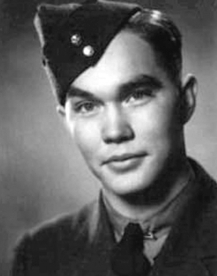
 Fred Sutherland was one of the last two surviving airmen who took part in the Dam Buster raid in May 1943. An air gunner in the RCAF, Sutherland flew with Pilot Officer Les Knight. They had completed a tour of operations on 50 Squadron when they volunteered to join a new squadron for a ‘special mission’. The squadron became 617 Squadron. Sutherland and his crew attacked the Eder Dam and it was their bomb that breached the dam. In September, the crew flew on the disastrous raid to breach the Dortmund-Ems Canal. In bad weather, their Lancaster hit some trees and the crew baled out (Knight was killed). Sutherland avoided capture and with the help of the escape lines he finally crossed the Pyrenees and reached Gibraltar. He returned to Canada as an instructor.
To read full obituary click HERE
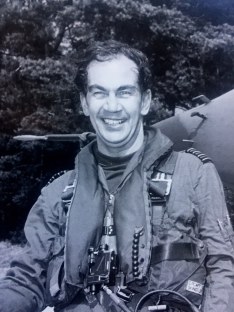 Sir Anthony Skingsley held a series of influential post in the RAF and in NATO. After an early flying career centred on the Canberra and later the Victor, he commanded RAF Laarbruch in Germany before a series of key appointments in MoD where he was responsible for planning and costing the future RAF programme. Then began a number of increasingly important appointments, first at SHAPE and then as the Commander in Chief in RAF Germany with the dual role of Commander Second Allied Tactical Air Force (2 ATAF). His final appointment was as Deputy Commander in Chief, Allied Forces Central Europe at a time of great international political change following the collapse of the Soviet Union. His warm personality, linguistic skills and sharp intellect made him a very popular and effective commander.
 Harry Irons tried to enlist into the RAF when he was 16 years old but was unsuccessful. Adopting his mother’s maiden name, and claiming he was almost 18, his second attempt succeeded and he joined up and later trained as an air gunner. He completed more than 60 bombing operations, first on Lancasters and then on the Halifax. At the end of the war he was awarded the DFC. In later life he became a devoted campaigner for a Bomber Command Memorial that was eventually dedicated in 2012. He advised on the accuracy of the seven members of aircrew depicted on the memorial. The photograph shows him at the memorial in Green Park.
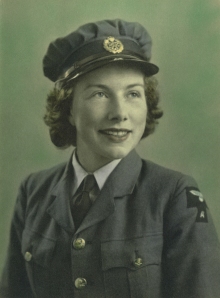 Joan was on duty in the operations room of HQ No. 11 Group, Fighter Command at RAF Uxbridge when the Prime Minister, Winston Churchill, visited at the height of the Battle of Britain. She was one of ten WAAFs surrounding the plotting table maintaining the plot of incoming enemy raids on 15 September 1940. During the afternoon, the Luftwaffe launched a mass raid against London and the AOC, Sir Keith Park, scrambled all his squadrons. Churchill asked how many reserves there were, to which Park made his famous reply. “There are none”. Joan later served at RAF Tangmere and watched as the D-Day convoys sailed with her fiancé, Lieutenant Tom Fanshawe DSC, in command of a leading corvette. After the war she accompanied her husband during his long career in the Royal Navy. She flew an aerobatic sortie on her 97th birthday.
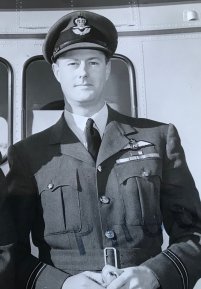 John M’Kenzie-Hall spent much of his RAF flying career in the helicopter world. He served during the Malayan Emergency and carried troops to remote jungle clearings. He flew throughout the brief Suez campaign of 1956 and landed Royal Marines on the Egyptian beaches. For seven years he was in charge if the small helicopter contingent of the Queen’s Flight. On one occasion, with HRH Prince Philip on board, the side window in the cockpit came loose and threatened to break away and strike the tail rotor, with potentially catastrophic results. Despite great discomfort and incurring a long-lasting injury, he managed to hold on to the offending window until the helicopter landed.. He was appointed MVO.
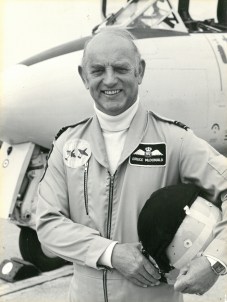 Bruce McDonald joined the Royal Navy as a seaman and saw service off Palestine before joining the RAF and training as a pilot. He flew jet fighters before becoming a flying instructor. He also saw service in Kenya during the Mau Mau Emergency. He became one of the best known and most respected flying instructors serving at the Central Flying School on four tours including one with Standards Flight. He formed and then led the ‘Vintage Pair’, a Meteor and Vampire synchro aerobatic pair. He was twice awarded the AFC and also a Queen’s Commendation for Valuable Service in the Air. Between his CFS tours he flew Hunters in Germany, Lightning fighters and instructed on the Jaguar.
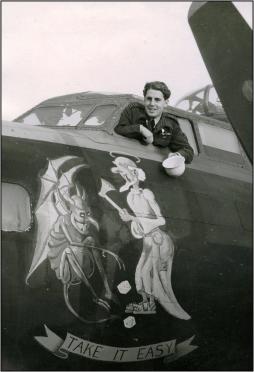 John Wynne completed 40 operations flying Wellington bombers in the Middle East with 40 Squadron. He was awarded the DFC. He later joined 214 Squadron to fly the US-built B-17 Fortress on electronic countermeasure duties, which involved jamming enemy night fighter communications. His aircraft was badly damaged and, thinking he was over Allied territory, his crew baled out. Wynne, unable to release some of his equipment, flew the badly damaged aircraft back to the UK alone. He later flew on the early Canberra and Valiant squadrons, including operations during the Suez campaign.
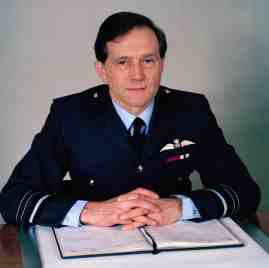 Sir Alec Morris was an expert in all facets of signals and communications and their operational use. Early in his career he also specialised in guided weapons. He served at experimental establishments and in the Procurement Executive. His senior appointments included the Director of Signals Air before serving as the Air Officer Engineering at HQ Strike Command. In 1981 he became the Chief Engineer of the RAF. During this period he was responsible for the huge engineering support required during the Falkland’s War including the development of Wideawake Airfield on Ascension Island and establishing links with British industry to provide additional capabilities for in-service aircraft involved in the conflict.
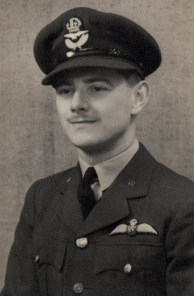 Squadron Leader Owen Ellison flew Wellington bombers during the North African and Italian campaigns. He flew on the first RAF raid to drop mines in the River Danube to prevent the river traffic carrying oil and supplies to the forward armies. He also attacked marshalling yards and railways in Rumania, Yugoslavia and in Italy. He bombed Luftwaffe airfields in Austria as the Allied armies advanced north. He was awarded a DFC. After a post-war RAF career he ran a hotel in Barbados and was well known for his parties and generous hospitality.
 To read full obituary click
 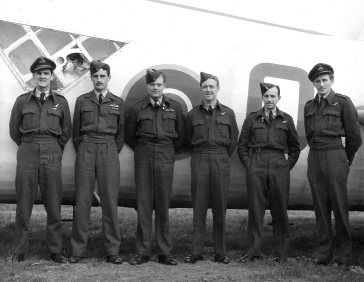 New Zealand-born AVM Gibbs flew Dakota transport aircraft during the North African campaign and later in Italy and to the Yugoslav partisans. During the Allied invasion of Sicily he flew a diversionary raid to drop dummy paratroopers and flares over the beach head. Once established in southern Italy, he made the first daylight landing in Yugoslavia when he took Fitzroy Maclean and some of his men to Bosnia. He later converted to the Martin Marauder bomber and flew with Coastal Command after his return to England. After the war he served in Pakistan and Sudan and enjoyed a long post-war career flying Venom, Hunter and Lightning jets. He commanded the Lightning base at RAF Wattisham before serving in RAF Germany as the air officer in charge of administration. He retired to New Zealand and died on October 3 aged 97.
 GRAHAM PITCHFORK