 Molly Rose was one of the last surviving ‘Spitfire Women’ who flew with the Air Transport Auxiliary (ATA) during the Second World War. During the course of the war she delivered 486 aircraft and flew 38 different types ranging from the Tiger Moth to the Wellington bomber. Her favourite was the Spitfire, which she flew many times but she also mastered the Mosquito and the Beaufighter, both with a tendency to swing on take off and aircraft that some squadron pilots found difficult to handle.
For full obituary read HERE

 Cranefield was a Dakota pilot on No 233 Squadron who flew into Normandy to support the D-Day beachhead. During Operation Market Garden, the airborne assault on the bridges in the Netherlands, he towed a glider to Arnhem on the first wave. On a later wave he was seriously wounded but continued to the DZ to drop his supplies. He was awarded an immediate DFC.
 Colin Colquhoun flew Spitfires on ground attack missions during the Italian campaign and during the invasion of the South of France. Post war he flew fighters and became an expert aerobatic pilot flying the Vampire jet fighter. He flew a Vampire when six of them made the first ever crossing of the Atlantic by jet aircraft .
 After training as a pilot during his National Service, Alex Roberts joined Short Brothers as a test pilot. He was the project pilot for the Short SC 1, the first British fixed-wing VTOL aircraft and also for the Canberra U 10 and Canberra PR 9. He carried out very high altitude tests and later test flew the Skyvan and Belfast aircraft before filling numerous senior management posts with the company.
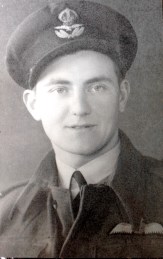 After escaping during the retreat from Dunkirk as a private soldier, Lambert joined the RAF and flew fighter reconnaissance aircraft. Initially the Tomahawk and then the Mustang he later commanded a Typhoon squadron in Normandy in support of the Allied advance into the Low Countries. Post-war he specialised in fighter operations and commanded a Vampire jet fighter squadron in Germany during the Berlin Air Lift. He served on the NATO staffs before retiring.
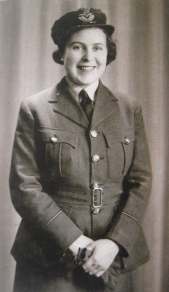 Eileen was a WAAF who served in Fighter Command and was commissioned. She became a Filter Officer at Bentley Priory in the air defence operations centre. In late 1944 she and some of her colleagues went to Belgium to analyse the launching of the V-2 rocket in order to determine their launch sites.
 Sir Charles Souter rose through the RAF Medical Branch to become the RAF’s most senior doctor filling the post of Director General Medical Services (RAF) for three years. He was the Principal Medical Officer in Aden at the time of the British withdrawal and also served in Hong Kong and Cyprus.
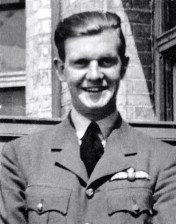 Wing Commander Terry Kane was one of the few fighter pilots shot down during the Battle of Britain and captured. He spent over four years in captivity and after a year was joined by his brother who had been shot down in his Whitley bomber.
 Howard Murley flew 39 operations on Lancaster bombers during the war earning a DFC. He later flew during the Berlin Air Lift before becoming a test pilot at Farnborough. He flew the experimental Avro 707 and a on a second tour at Farnborough he flew many types including a replica World War One fighter, the SE 5A.
 GRAHAM PITCHFORK