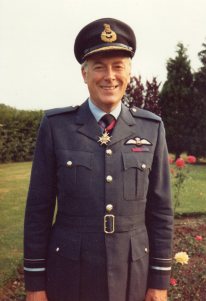
 AVM Michael Robinson was a Cold War bomber pilot who commanded a V-Bomber squadron, which provided part of the UK’s strategic nuclear deterrent and part of Britain’s contribution to NATO’s retaliatory strike plan. Robinson had been trained in the first post-war entry at the RAF College Cranwell before seeing service in the Far East and in Germany. During his command of No.100 Squadron, equipped with the Victor 2, he took an aircraft to New Zealand for the RNZAF International Air Display. His later appointments included staff tours at MoD, HQ Strike Command and as the Senior Air Staff Officer at HQ 1 (Bomber) Group. He was also the Assistant Commandant at the RAF College.
To read full obituary click HERE
 The death of Sir Frederick Sowrey aged 96 brings to an end the RAF services of a remarkable family whose members had served for an unbroken period of 65 years. The son of WW 1 fighter ‘ace’ and the destroyer of a Zeppelin over Essex, Group Captain Frederick Sowrey DSO, MC, AFC, Sowrey joined the RAF in 1940 and saw service throughout the Second World War before concentrating on fighter operations flying the Meteor and then commanding a Javelin squadron. He commanded the RAF transport base at Abingdon and was the senior air staff officer who planned the UK withdrawal from Aden in 1967. His senior appointments included responsibility for RAF training, commandant of the National Defence College and the UK representative at CENTO. He was an avid motor racer and drove in the London to Brighton rally in his 1901 Darracq Tonneau. He founded the RAF Historical Society and was its dynamic president.
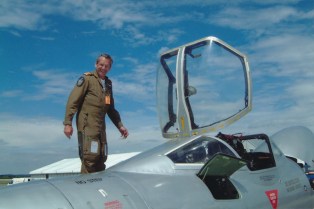 Wing Commander Rustin was one of the RAF’s leading test pilots whose 17 years of testing experimental aircraft and the RAF’s front-line fighters was recognised by him being awarded the Air Force Cross and Bar. After a period as a fighter pilot, Rustin completed the course at the Empire Test Pilot’s School where he was awarded the McKenna Trophy for the best all-round student on his course. He served at the Royal Aircraft Establishment’s three major test centres at Farnborough, Bedford and Boscombe Down. After leaving the RAF he flew classic jets on the airshow circuit and qualified as an airship captain.
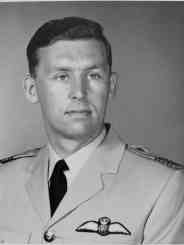 Air Marshal Sir John Harris, known throughout the RAF as ‘Win’, was an expert in anti-submarine warfare and one of his officers described him as ‘champion of the maritime air force’. His career began flying Shackletons in Gibraltar and, after an exchange tour with the United States Navy flying the P-3 Orion, he began his long association with the Nimrod maritime patrol aircraft, first as a squadron commander and then as station commander at RAF Kinloss. After appointments in MoD and in NATO, he served as the Commandant General of the RAF Regiment. His final appointment was as Air Officer Commanding No 18 (Maritime) Group before retiring. He died on July 2 aged 81.
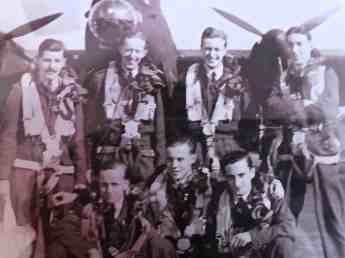 Charles Clarke was a Lancaster bomb-aimer shot down in February 1944. By early March he had reached Stalag Luft III a few weeks before the mass break out that saw 76 men escape through a tunnel. All bar three were recaptured and 50 were murdered by the Gestapo. Throughout his life he worked hard to commemorate their memory and returned to the remains of the camp on a number of occasions, the most recent just three months before he died on May 7. After the war he had a long career as a supply officer seeing service overseas including the withdrawal from Aden in 1967. He donated much of his retirement to RAF charities including the Bomber Command Association, the RAF POW’s Association and the RAF Benevolent Fund.
 Richard Cole, who has died aged 103, was the last survivor of the 80 US airmen known as the “Doolittle Raiders” who carried out the first bombing raid against Japan in the Second World War. Cole was the co-pilot to James Doolittle, the leader of the raid. Sixteen Mitchell bombers were loaded on the US aircraft carrier Hornet and they were launched from the 600-foot flight deck when they were 650 miles from the Japanese coast. They bombed Tokyo before heading for Nationalist China. Cole and his crew baled out after crossing the Chinese coast and eventually were returned to Allied lines. He later flew transport aircraft in support of the campaign in Burma, served in Korea and retired in 1967. He was awarded the DFC and two clusters. In 2016 he attended the naming ceremony of the USAF’s latest bomber called ‘The Raider’.
 Bryan Colston and his colleagues on 225 Squadron moved to North Africa in November 1942 as part of Operation Torch, the Allied landings in Algeria. Equipped initially with Hurricanes, Spitfires began to arrive in early 1943 and these were assigned to Colston’s flight. Flying from advanced airstrips in the fighter reconnaissance role, the squadron supported the British 1st Army as it advanced towards Tunis. Colston carried out many reconnaissance and low level strafing sorties, which resulted in the award of the DFC. He supported the liberation of Tunis and later flew over the island of Pantelleria Island and dropped a message instructing the garrison to surrender. Invalided home with typhoid fever he later instructed navigation and fighter reconnaissance tactics at a Spitfire OTU.
 Tom Maxwell was only nineteen years old and the rear gunner when he was forced to bale out of his Lancaster bomber over northern France. The aircraft was returning from an attack on Stuttgart when it was badly damaged and had to be abandoned on the return flight. He was sheltered by farmers before being taken to Paris and then by train to the Spanish border near Pau. Together with some USAAF airmen, a guide took him over the Pyrenees into Spain. After returning to England, he continued to fly on operations and was awarded the DFC. He later served as an air traffic control officer before spending ten years in the Sultan of Oman’s Air Force.
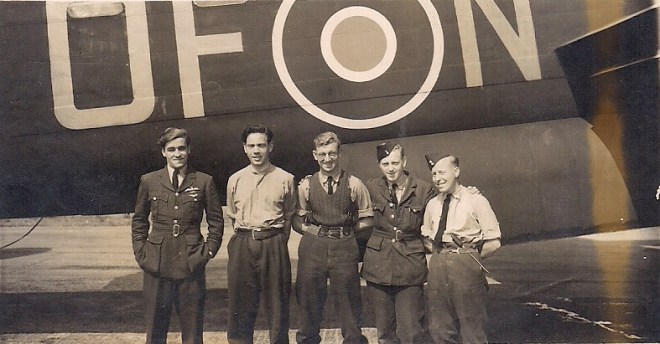 John Sauvage flew sixty-four operations in Bomber Command and was decorated three times. His first tour was on Hampdens with 44 Squadron and after a spell as a bombing instructor he was recruited to the Pathfinder Force. He attacked Hamburg, Peenemunde and Berlin in addition to targets in the Ruhr and in Italy. He marked the old Zeppelin sheds at Friedricshafen, where key radar components were being manufactured. His Lancaster was badly damaged and he flew on to Algeria where he landed safely. After his second tour he joined Transport Command and flew the York. On one sortie he took ‘Monty’s Double’ to Gibraltar and North Africa in an attempt to deceived the Germans a few weeks before D-Day. After he left the RAF he flew on the Berlin Airlift and was a pioneer of the air charter and holiday tourist airline business becoming the the managing director of Britannia Airways and chief executive of Thomson Travel Group.
 Frank Griffin was decorated twice as a Pathfinder pilot in Bomber Command. Initially he trained as an air observer and flew anti-submarine patrols over the Atlantic and North Sea. After training as a pilot he flew Lancasters and attacked Berlin numerous times. In December 1943 his aircraft was badly damaged but he carried on to the target and returned safely. He was awarded the DFC. With 103 Squadron he attacked the Ruhr and targets in north France prior to D-Day. He was awarded the DSO – the citation concluding “he was a fearless and determined captain”. He joined British South American Airways after the war and searched for the Avro Tudor Star Tiger, which was lost in the Bermuda Triangle with the wartime commander Air Marshal Sir Arthur Coningham on board. Griffin was 99 when he died in March.
 GRAHAM PITCHFORK