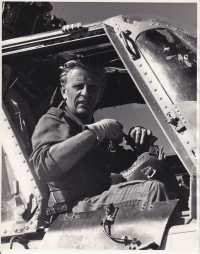
 Alek Tarwid had an adventurous journey from his native Poland before arriving in the UK to join the RAF. Trained as a pilot near the end of the war, he flew Meteors and Hunters before transferring to helicopters flying on operations in Malaysia, Northern Ireland and Oman. He played a key role flying Wessex helicopters in support of the SAS during Operation Hornbeam. He was appointed MBE and decorated by the Sultan of Oman.
For full obituary click HERE
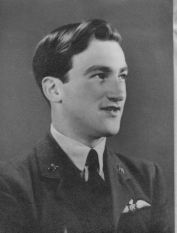 Nigel Rose flew Spitfires during the Battle of Britain and is one of the last survivors of ‘The Few’. Flying from Westhampnett near Tangmere, he accounted for at least two, and probably a third, enemy aircraft at the height of the Battle. He spent the later years of the war as a fighter and weapons instructor.
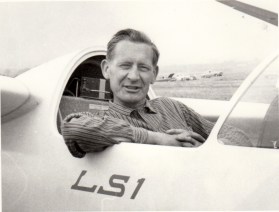 David Ince flew many operations in Typhoon fighter bombers in the period immediately after D-Day. He carried out many ground-attack sorties against German Panzer troops and motor transports. By early 1945 his squadron had moved to Holland to attack targets in Germany. He was awarded the DFC. After the war he worked in the aircraft industry and became a champion glider pilot at national level and test pilot. He established a number of records.
 The latest Spotlight feature in the October issue of Fly Past focuses on the one of World War 2’s unsung workhorses. the Supermarine Walrus, an aircraft designed by R.J. Mitchell. My article, given the title The Sea Shall Not Have Them by the editorial team, concentrates on the great work by two air sea rescue pilots, Tom Fletcher DFC, DFM & Bar who operated in the waters around the south of England, and New Zealander Arnold Divers DFM who made a number of dramatic rescues in the Mediterranean area.
 Osprey Publishing have recently released Shot Down and On the Run and Shot Down and in the Drink as a soft back following the success of previous issues in both hard and soft back (see the Books section).
 Jack Perry was one of the last surviving members of the ‘Guinea Pig Club’, the organisation established in 1941 for badly burned airman who were treated by the pioneering plastic surgeon Sir Archie McIndoe. Perry suffered 80% burns to his face, ears and hands when his halifax bomber crashed in flames in 1944. Over the next two years he underwent 30 operations. In later life he became the social secretary of the club and inspired his colleagues and those who suffered in later conflicts. For his work he was appointed MBE.
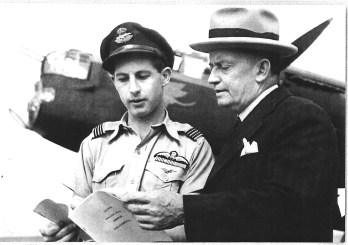 Australian Peter Isaacson completed two tours as a bomber pilot, the second with the Pathfinder Force flying Lancasters. He was awarded the DFC and the DFM. After 45 operations, he and his all-Australian crew flew a Lancaster to Australia where they gave many displays to raise war bonds. On one sortie, Isaacson flew his Lancaster under the Sydney Harbour bridge. He was also awarded the AFC. The photograph shows him with Australia’s Deputy Prime Minister.
 The Spotlight series in the latest edition of Flypast focuses on the Hawker Sea Fury, one of the fastest single piston-engined piston-powered fighters ever built. The feature follows the standard format with accounts of its operational service and I have contributed an article, Fast and Furious, on the men who flew the aircraft, selecting three whose experiences are very different.
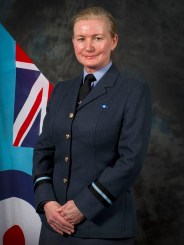 Jayne Millington was an expert on air defence operations and battlespace air management. She was part of the THRUST land speed world record event and she masterminded and commanded the air defence measures set up for the 2012 Olympics. She was seen by many as a trailblazer fort women in the RAF. She died of cancer whilst serving as the United Kingdom National Representative at Supreme Headquarters Allied Powers Europe (SHAPE).
 The Spotlight feature in the August 2017 edition of the magazine focuses on the Avro Lincoln, a four-engine bomber derived from the Lancaster. Just too late to see operational service during the Second Word War, it was the mainstay of Bomber Command until the advent of the jet bombers. It did however, play an important part during air policing and counter insurgency operations in Malaya and in Kenya. My article, Big Bomber Little Wars describes the role played by Lincolns of the RAF and the RAAF.
 GRAHAM PITCHFORK