 Len Bartlett, who has died in Australia aged 100, flew Hurricanes during the Battle of Britain. He joined No. 17 Squadron as a sergeant pilot and was credited with sharing two destroyed during the Battle followed in November by two confirmed. Later he commanded No. 253 Squadron in North Africa and Italy and was awarded the DSO. He commanded the airstrip on the island of Vis when the US authorities awarded him the Legion of Merit. He remained in the RAF, was wing commander flying at Wattisham and station commander at Bawdsey.
Read full obituary HERE
 Trevor Thain was an observer who flew 42 bombing operations over North-west Europe in Wellingtons of No. 99 Squadron resulting in the award of the DFC. On one occasion he was forced to bale out over the Fenlands landing in a flooded dyke. He became one of the RAF’s specialist navigators and was one of two who navigated the Lincoln bomber Aries III on a record breaking flight to Khartoum before the aircraft continued eastwards to complete a round-the-world flight.
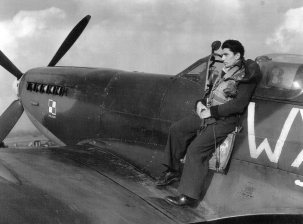 Bob Nawarski made a dramatic escape from his native Poland to join the RAF and fly as a fighter pilot. His first tour was on No. 316 Squadron flying from RAF Northolt over France and the Netherlands. After a rest tour he joined No. 302 Squadron and flew numerous missions after the D-Day landings attacking road and rail traffic, troop concentrations and supply dumps. After his 172nd operation he was awarded the DFC. He also received Poland’s Cross for Valour with two Bars.
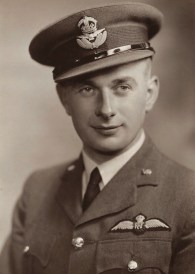 Ted Holloway led a section of Bisley bombers on a raid to attack an enemy airfield in Tunisia. The leader of the squadron formation was Wing Commander Hugh Malcolm. None of the force of eleven aircraft survived and Hugh Malcolm was awarded a posthumous Victoria Cross. Holloway later received the DFC. A few months later he survived a ditching in the Mediterranean. Post war he commanded a Canberra photographic reconnaissance squadron and created an unofficial record for a direct flight from the UK to Aden.
 Bernard Brown was the last surviving New Zealand born fighter pilot who flew in the Battle of Britain. He flew army co-operation sorties during the Dunkirk evacuation before volunteering for Fighter Command at the height of the Battle. He later became an instructor and after the war flew with British European Airways until his retirement.
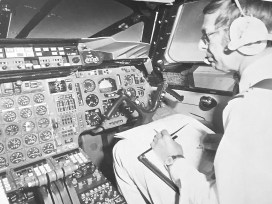 Walker was an RAF night fighter pilot who attended No. 13 Course at the Empire Test Pilot’s School, Farnborough. After an exchange tour as a test pilot with the Royal Netherlands Air Force he joined the British Aircraft Company. He test flew the BAC 1-11 before joining the Concorde programme.
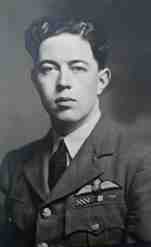 After completing a tour of duty as a Wellington pilot in the Middle East, Tom Long volunteered for the Pathfinder Force. He flew Mosquitoes with the Light Night Striking Force and raided Berlin twenty-five times in the latter stages of World War 2. He was twice awarded the DFC.
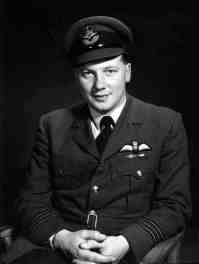 Peter Latham was a very experienced Cold War fighter pilot who was the leader of the Black Arrows formation aerobatic team, one of the predecessors of the Red Arrows. The displays at the Farnborough Air Show with formations up to sixteen Hunter aircraft captured the imagination of the public. He went on to command the Akrotiri Strike Wing and then RAF Tengah in Singapore. His final appointment was as AOC No. 11 (Fighter) Group.
 A former Halton apprentice, Pawsey trained as a pilot and flew Spitfires during the Italian campaign. With little air opposition, Pawsey’s squadron, No. 253, was engaged in ground attack sorties in the Balkan Air Force in support of Marshal Tito’s Yugoslav partisans.
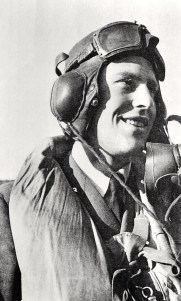 Burbridge was the most successful British and Commonwealth night fighter pilot of World War Two. With his navigator, Flight Lieutenant Bill Skelton, he destroyed 21 enemy aircraft and three V-1 flying bombs. On one sortie in support of a Bomber Command raid, the pair destroyed four aircraft . His exploits were recognised by the award of two DSOs and two DFCs. He devoted the rest of his life to his Christian beliefs with the Scripture Union.
 GRAHAM PITCHFORK