Category Archives: Uncategorized

DAILY TELEGRAPH – OBITUARY WING COMMANDER JOHN BELL

Too tall to be a pilot, John Bell trained as an air observer and later specialised as a bomb aimer. He flew 30 operations in the Lancasters of 619 Squadron before transferring with his crew to 617 Squadron. Soon after his arrival, the squadron began dropping Barnes Wallis’ 12,000 lb “Tallboy” bomb with great precision. Bell bombed the Saumur Tunnel shortly after D-Day and a few days later his bomb landed close to the V-2 site under construction at Wizernes, a huge reinforced concrete dome. The shock-wave effect undermined the structure causing severe damage. After his 50th operation he was awarded the DFC. He remained in the RAF as a photographic interpreter seeing service during the Berlin Airlift and in Korea. He was a strong supporter of the RAF Benevolent Fund and was president of the 617 Squadron Association. He raised funds for the Bomber Commands memorial in London’s Green Park.

To read full obituary click HERE
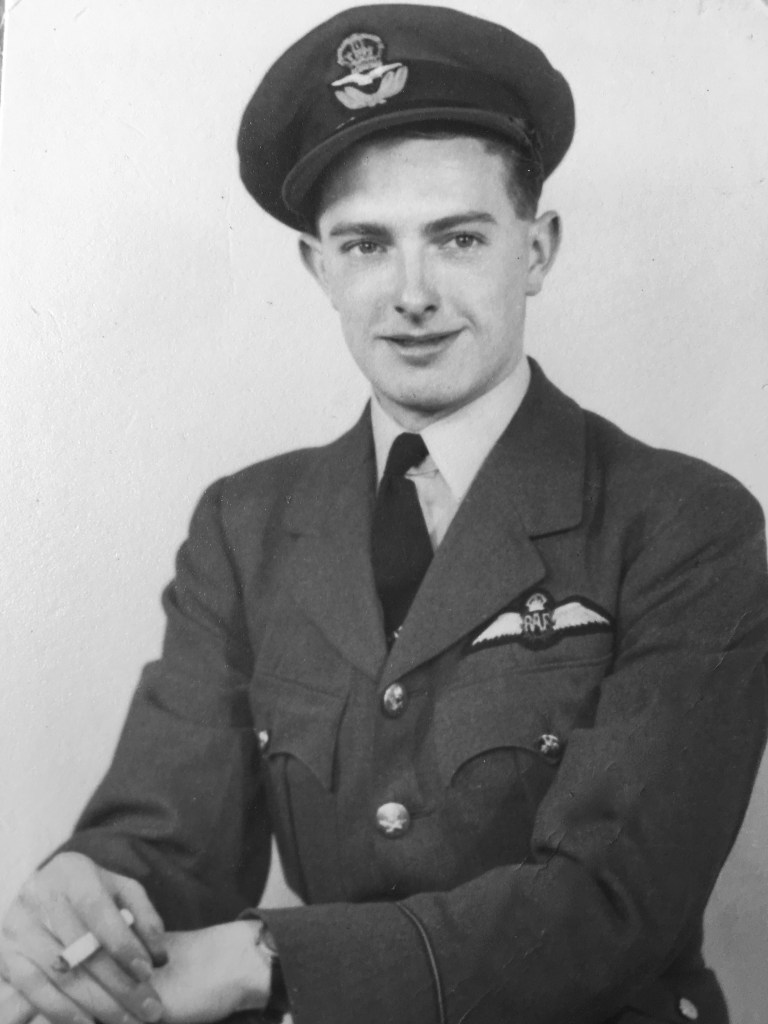
DAILY TELEGRAPH – OBITUARY FLT LT ‘RUSTY’ WAUGHMAN

“Rusty” Waughman, who has died aged 100, completed a tour of operations as aLancaster pilot on a squadron that suffered some of the worst casualties in the war. The squadron’s aircraft were equipped with a special apparatus that searched out and jammed enemy radio transmissions. To operate this equipment, and then transmit spurious messages to German night fighter crews, a specially trained German-speaking operator accompanied the crew. Waughman and his crew flew on the ill-fated operation to bomb Nuremberg on the night of March 30/31, 1944 when Bomber Command suffered its worst losses. On another occasion, after a collision over Hasselt, Waughman brought his badly damaged aircraft back o base. He and his crew were the first in six months to survive a tour of 30 operations. He was awarded the DFC. Post war, he joined Transport Command, became an examiner and flew many sorties during the Berlin Airlift. For his work in the Command, he was awarded the AFC.

To see the full obituary click HERE

FLYPAST – A PUNISHING YEAR

In this second of four articles, the Fighter Command offensive over NW Europe during 1942 is assessed. The operations became more sophisticated and sometimes involved over twenty fighter squadrons. The Luftwaffe chose its moments to attack, usually as RAF fighters were reaching their maximum endurance, and RAF casualties losses remained heavy and almost always greater than those inflicted on the enemy. Following the German invasion of Russia, there was no discernible transfer of squadrons to the east. The huge effort in support of Operation Jubilee, the ill-fated Dieppe raid, is outlined. Whilst the operation was a failure, Fighter Command learnt many valuable lessons, not least in the command and control of fighter forces. The experience gained in the heat of offensive operations ultimately led to the Tactical Air Force formed on 1 June 1943.

DAILY TELEGRAPH – OBITUARY AIR VICE-MARSHAL ERIC MACEY

Eric Macey began his RAF career flying the Hunter fighter but, after the 1957 Sandy’s Defence White Paper that severely reduced the fighter force, he transferred to the V-Force, which was entering service. Initially he flew the Valiant in the air-to-air refuelling role, which included the first non-stop flight to Singapore. He then converted to the Vulcan , an aircraft that dominated the rest of his flying career. He commanded 101 Squadron, was the chief instructor at the Vulcan OCU and then commanded RAF Waddington with three Vulcan squadrons. His later career took him to RAF Germany as the senior air staff officer, before becoming Commandant at the RAF College Cranwell. His final appointment was in MoD as the Director General Training.

To read full obituary click HERE

DAILY TELEGRAPH – OBITUARY MARSHAL OF THE RAF SIR PETER HARDING

Sir Peter Harding in the cockpit of a P-51 Mustang during a visit to the USA in 1991

Sir Peter Harding, who has died aged 87, was the RAF’s Chief of Air Staff (CAS) before becoming the Chief of Defence Staff in 1992 Eighteen months later he resigned following a tabloid expose of his affair with the wife of a former Conservative MP.

Harding joined the RAF as a national serviceman and trained as a pilot before beginning a full career. He flew Canberra bombers, became a flying instructor and later converted to Wessex helicopters before taking command of 18 Squadron in Germany. He commanded the large base at Bruggen with three Phantom squadrons. He flew regularly and claimed that the Phantom was his favourite aircraft. He served in MoD in numerous appointments on defence policy and later served at NATO in a key appointment. He commanded No 11 (Fighter) Group and was Vice-Chief of the Defence Staff before becoming the C-in-C of Strike Command. He was appointed CAS in November 1988. He was widely admired for his presence, charisma, intellect and social manner. Following reports of his affair in the News of the World, he resigned.

To read the full obituary click HERE

DAILY TELEGRAPH – OBITUARY AIR MARSHAL SIR JOHN KEMBALL

Photographed at Laarbruch in front of a Buccaneer

Sir John “Kip” Kemball began his flying career as a National Service pilot before accepting a permanent commission. He became a flying instructor before joining 8 Squadron in Aden flying the Hunter on operations in support of ground forces. He was the first RAF pilot to log 1,000 hours flight time on the Phantom when he was an instructor at Coningsby. He commanded 54 Squadron with Jaguars before becoming the station commander at Laarbruch in Germany where he flew the Buccaneer and the Jaguar. He was Commandant of the Central Flying School and served in the Defence Intelligence Staff where he became the Deputy Chief of Defence Intelligence. As the COS and Deputy Commander at HQ Strike Command, he became the COS at the British Primary War HQ during the Gulf War of 1991 where his calm, tolerant and tactful manner was tested, but attracted the admiration of his C-in-C and army and navy colleagues. In retirement he was Deputy Lieutenant of Suffolk and held numerous appointments in the county community.

To read full obituary click

.https://www.telegraph.co.uk/obituaries/2021/06/16/air-marshal-sir-john-kemball-pilot-flew-ground-attack-missions/

DAILY TELEGRAPH – OBITUARY AIR MARSHAL SIR ROY AUSTEN-SMITH

Air Marshal Sir Roy Austen-Smith was probably the last senior RAF officer to see action in the Second World War. He flew Spitfires in the closing weeks of the war with 41 squadron, based first at Eindhoven and then at Celle in Germany. After the war he saw action in Malaya against the communist terrorists when he was awarded the DFC. His varied flying career saw him command a Canberra squadron in Cyprus and a Victor bomber squadron in Suffolk. He later commanded RAF Wattisham, home to two Lightning squadrons. He was Commandant at the RAF College Cranwell at a time of great change and later served as the Commander of British Foreses in Cyprus before becoming the Head of the British Delegation in Washington. He was a fine rugby player representing Harlequins, the RAF and the Combined Services.

For the full obituary click HERE

DAILY TELEGRAPH -OBITUARY SQUADRON LEADER ALLAN SCOTT

Allan Scott became an “ace” Spitfire pilot during the Siege of Malta in 1942. He had flown to the besieged island after taking off from the aircraft carrier Eagle and fought during the hectic “Second Blitz” when he shot down at least five enemy aircraft and damaged others. During Operation Pedestal, the crucial re-supply convoy, Scott provided support as the remnants, including the tanker Ohio, sailed into Valetta. He was awarded an immediate DFM. He returned to the UK to become an instructor at a fighter training unit before become a test and ferry pilot. He served post war and transferred to the air traffic control branch after his flying days were over. During the RAF 100 celebrations in 1918, he flew in a Spitfire and had hoped to do so again on his 100th birthday, but it was not to be.

To read full obituary click HERE