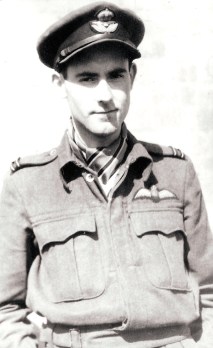
 Dennis Barry was a Spitfire pilot who was the flight commander of No. 616 (South Yorkshire) Squadron and was amongst the first RAF pilots to convert to jet fighters when the squadron was free-eqiopped with the Meteor in June 1944. He led the first detachment to Europe and flew ground attack sorties in the latter weeks of the war. He rejoined the squadron after the war when the Auxiliary Air Force was reformed.
Read full obituary HERE
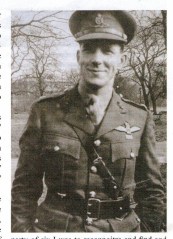 A Royal Artillery officer, Ian Neilson was one of the earliest Air Observation Post (AOP) pilots. He was the flight commander of No. 652 (AOP) Squadron and he waded ashore on Sword Beach during the afternoon of D-Day to establish a landing ground for his Auster aircraft. He subsequently few 55 operations during the Normandy campaign and was awarded the DFC. Post-war he formed No. 666 (Scottish) AOP Squadron.
 Len Bartlett, who has died in Australia aged 100, flew Hurricanes during the Battle of Britain. He joined No. 17 Squadron as a sergeant pilot and was credited with sharing two destroyed during the Battle followed in November by two confirmed. Later he commanded No. 253 Squadron in North Africa and Italy and was awarded the DSO. He commanded the airstrip on the island of Vis when the US authorities awarded him the Legion of Merit. He remained in the RAF, was wing commander flying at Wattisham and station commander at Bawdsey.
 Trevor Thain was an observer who flew 42 bombing operations over North-west Europe in Wellingtons of No. 99 Squadron resulting in the award of the DFC. On one occasion he was forced to bale out over the Fenlands landing in a flooded dyke. He became one of the RAF’s specialist navigators and was one of two who navigated the Lincoln bomber Aries III on a record breaking flight to Khartoum before the aircraft continued eastwards to complete a round-the-world flight.
 This special edition by Key Publishing commemorates the 75th Anniversary of Britain’s greatest wartime bomber. This superbly illustrated 98-page souvenir issue includes an article I prepared ‘Over the Top’.
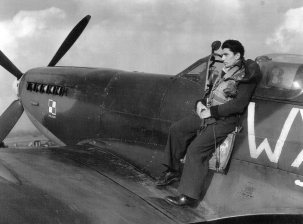 Bob Nawarski made a dramatic escape from his native Poland to join the RAF and fly as a fighter pilot. His first tour was on No. 316 Squadron flying from RAF Northolt over France and the Netherlands. After a rest tour he joined No. 302 Squadron and flew numerous missions after the D-Day landings attacking road and rail traffic, troop concentrations and supply dumps. After his 172nd operation he was awarded the DFC. He also received Poland’s Cross for Valour with two Bars.
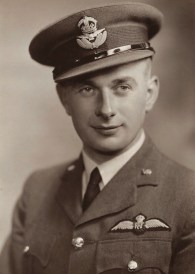 Ted Holloway led a section of Bisley bombers on a raid to attack an enemy airfield in Tunisia. The leader of the squadron formation was Wing Commander Hugh Malcolm. None of the force of eleven aircraft survived and Hugh Malcolm was awarded a posthumous Victoria Cross. Holloway later received the DFC. A few months later he survived a ditching in the Mediterranean. Post war he commanded a Canberra photographic reconnaissance squadron and created an unofficial record for a direct flight from the UK to Aden.
 Bernard Brown was the last surviving New Zealand born fighter pilot who flew in the Battle of Britain. He flew army co-operation sorties during the Dunkirk evacuation before volunteering for Fighter Command at the height of the Battle. He later became an instructor and after the war flew with British European Airways until his retirement.
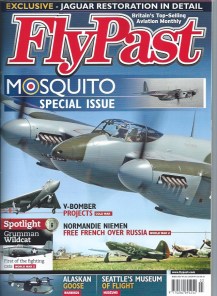 This detailed article outlines the crucial role played by the Mosquitos of Coastal Command in attacks against shipping in Norwegian waters. Based at RAF Banff in north-east Scotland, where the station commander was Group Captain the Honourable Max Aitken DSO, DFC, the five Mosquito squadrons of the ‘Banff Wing’ wreaked havoc amongst the enemy shipping carrying crucial raw materials to feed the German war machine. Using the six-pounder cannon and then the 3-inch rocket projectile (RP), the Mosquitos attacked in wing strength deep into the narrow fjords, the harbours and the Skagerak Sea. With No. 333 (Norwegian) Squadron flying their Mosquitos as outriders and Mustangs from Peterhead flying as escorts, the Banff Wing achieved great success, including the sinking of U-boats attempting to flee from the Baltic to the Atlantic.
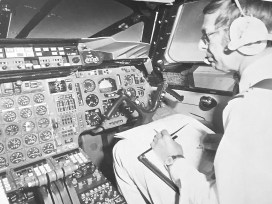 Walker was an RAF night fighter pilot who attended No. 13 Course at the Empire Test Pilot’s School, Farnborough. After an exchange tour as a test pilot with the Royal Netherlands Air Force he joined the British Aircraft Company. He test flew the BAC 1-11 before joining the Concorde programme.
 GRAHAM PITCHFORK