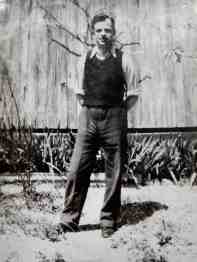
 Former Halton apprentice, Wally Lashbrook, later trained as a pilot. He flew 28 bombing operations in Whitleys, earning the DFM, before taking part in the first British Airborne commando raid (Operation Colossus). Later he was shot down in a Halifax but avoided capture and, with the aid of the Comet Escape Line, evaded capture and returned to Britain to learn that he had been awarded the DFC. He spent the latter years of the war as a test pilot being awarded the AFC. After leaving the service he spent many years working for the Army Cadet Force for which he was appointed MBE. He died aged 104.
Photo shows him ‘on the run’ in France
To read full obituary click HERE
 Air Vice-Marshal Chesworth was one of the RAF’s leading post-war operators in the maritime air role. Flying Sunderlands in Korea he was awarded the DFC and he later he flew Shackleton and Nimrod aircraft. He commanded the first Nimrod squadron and later was the station commander at RAF Kinloss, the home of three Nimrod squadrons. When serving as the Chief of Staff of No 18 Group he co-ordinated the air operations in support of the fleet during the Falkland’s war and oversaw the Vulcan attack (Black Buck) on Stanley Airport. Later he was Lord Lieutenant of Morayshire.
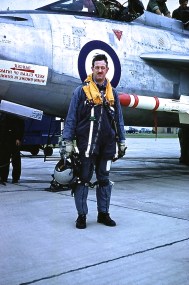 Air Vice-Marshal Peter Collins played a major role in the development and operation of the Mach 2 Lightning fighter. He was one of the original RAF pilots to evaluate the aircraft and he served as a test pilot, flight commander, squadron commander and station commander of Lightning units including RAF Gutersloh near the Inner German border. As an air commodore he served as the SASO at HQ 11 (Fighter) Group where he continued to have responsibility for the last of the Lightning squadrons.
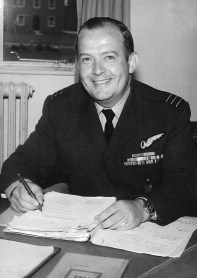 After a brief spell as an observer in Blenheim night fighters during the Battle of Britain, Ted Summers joined a ferry unit at Takoradi in the God Coast and led many air convoys of aircraft on the Trans-Africa Ferry route to Cairo via Khartoum. He was awarded the AFM. Later he served on Hudsons on anti-submarine work. Post-war he played a leading role during the Mau Mau campaign, for which he was appointed OBE, and served in charge of operations on a V-bomber base.
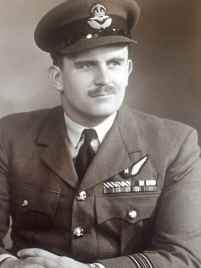 Rex Sanders was the lead navigator for two top-secret reconnaissance operations over the Soviet Union in the early 1950s. Flying a USAF RB-45C carrying RAF markings, he made two flights on Operation Ju-Jitsu to gather electronic and photographic intelligence. He had served on Halifax’s during the Second World War joining his squadron as the Battle of Berlin commenced in 1943-44. His 33 operations earned him the DFC. Later in his RAF career he specialised in guided weapons.
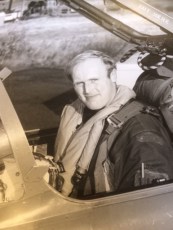 John Cockburn was a leading British test pilot who made a major contribution to the development of aircraft avionics, including the air intercept radar for the Lightning fighter and the terrain following radar later introduced into the Tornado strike aircraft. His services to the aviation industry were recognised by the award of a Queen’s Commendation for Valuable Service in the Air and his appointment as OBE.
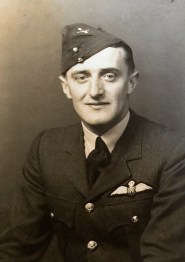 Wing Commander Gerald Lane was one of the last surviving pre-war pilots to fly bi-plane bombers. He flew bombing operations during the early months of the war and was awarded the DFC. He joined the first Halifax squadron and served on the British Mission in Washington. After leaving the RAF he gave many years service to the Territorial Forces for which he was appointed OBE.
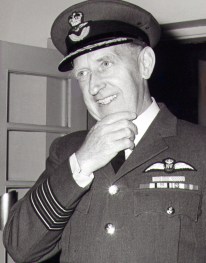 Joe Dalley was a sergeant pilot when he flew to Malta where he distinguished himself as a photographic reconnaissance pilot flying Spitfires during the Battle of Malta. He was awarded the DFM. After returning to the UK he flew against the V-1 flying bombs and destroyed two. In the post-war RAF he flew night fighters and specialised in guided weapons.
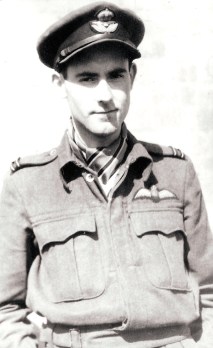 Dennis Barry was a Spitfire pilot who was the flight commander of No. 616 (South Yorkshire) Squadron and was amongst the first RAF pilots to convert to jet fighters when the squadron was free-eqiopped with the Meteor in June 1944. He led the first detachment to Europe and flew ground attack sorties in the latter weeks of the war. He rejoined the squadron after the war when the Auxiliary Air Force was reformed.
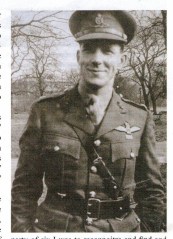 A Royal Artillery officer, Ian Neilson was one of the earliest Air Observation Post (AOP) pilots. He was the flight commander of No. 652 (AOP) Squadron and he waded ashore on Sword Beach during the afternoon of D-Day to establish a landing ground for his Auster aircraft. He subsequently few 55 operations during the Normandy campaign and was awarded the DFC. Post-war he formed No. 666 (Scottish) AOP Squadron.
 GRAHAM PITCHFORK