 Elizabeth Harrison escaped from Nazi Germany in 1933 to Belgium but had to flee again when the Germans invaded the country in May 1940. She and her family reached France where she served in the Resistance. After settling in England in 1968 she became the secretary of the RAF Escaping Society, her services being recognised by the award of the MBE. She remained in contact with the European ‘helpers’ until here death.
For more click HERE
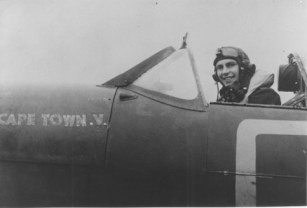 Percy Beake flew Spitfires in the latter stages of the Battle of Britain and on many escort missions and sweeps over northern France in the summer of 1941. He went on to fly Typhoons, initially with 183 Squadron and then in command of the rocket-firing 164 Squadron. He was heavily involved in operations in support of the operations for D-Day and the Normandy campaign when he was awarded the DFC.
 Squadron Leader Bob Cowper DFC & Bar is thought to be the last surviving Royal Australian Air Force fighter ‘ace’. He was credited with destroying at least six enemy aircraft flying initially from Malta as a Beaufighter pilot and later flying Mosquitoes of 456 (RAAF) Squadron during the period of D-Day and the Normandy campaign that followed. His various experiences entitled him to membership of three survivors ‘clubs’, the Late Arrivals, the Goldfish and the Caterpillar.
 Keith Lawrence was a New Zealander who flew Spitfires during the Battle of Britain before being badly wounded when he was shot down in November 1940. He returned to operations and flew Hurricanes at the height of the Battle of Malta with 185 Squadron. With four confirmed destroyed, two shared and numerous damage claims, he was awarded the DFC.
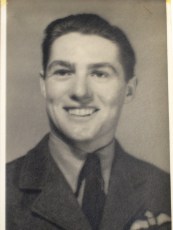 Flight Lieutenant Patrick Dorehill was the second pilot of a Lancaster which carried out a daring daylight attack on the MAN diesel-engine factory in Augsburg, southern Germany, earning him an immediate DFC and his captain,
  This morning’s Daily Telegraph carries the obituary of David Phillips who amassed the remarkable total of 31,037 flying hours. He flew transport aircraft immediately after the war before joining the airlines. He was also British aerobatic champion in 1957.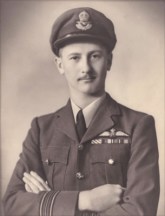
 GRAHAM PITCHFORK